
Mobile podiatrists offer specialized foot care tailored for elderly individuals, delivered conveniently at home mobile podiatrist for elderly near me. Their services range from routine assessments to managing complex conditions such as diabetic foot issues and fungal infections. By addressing common problems like corns, calluses, and nail care, these professionals aim to reduce discomfort and improve mobility. Understanding the scope of their care and how it benefits seniors reveals important considerations for those seeking accessible foot health solutions.
What Foot Care Services Does a Mobile Podiatrist Provide for Seniors?
A mobile podiatrist offers a range of essential foot care services tailored specifically to the needs of elderly patients. These services include routine foot assessments, treatment of common conditions like corns, calluses, and fungal infections, as well as nail care such as trimming thick or ingrown nails safely.
They also address issues related to circulation and diabetic foot care to prevent complications. Additionally People Podiatry, mobile podiatrists provide advice on proper footwear and foot hygiene, helping seniors maintain mobility and comfort.
What to Expect During a Mobile Podiatry Appointment at Home
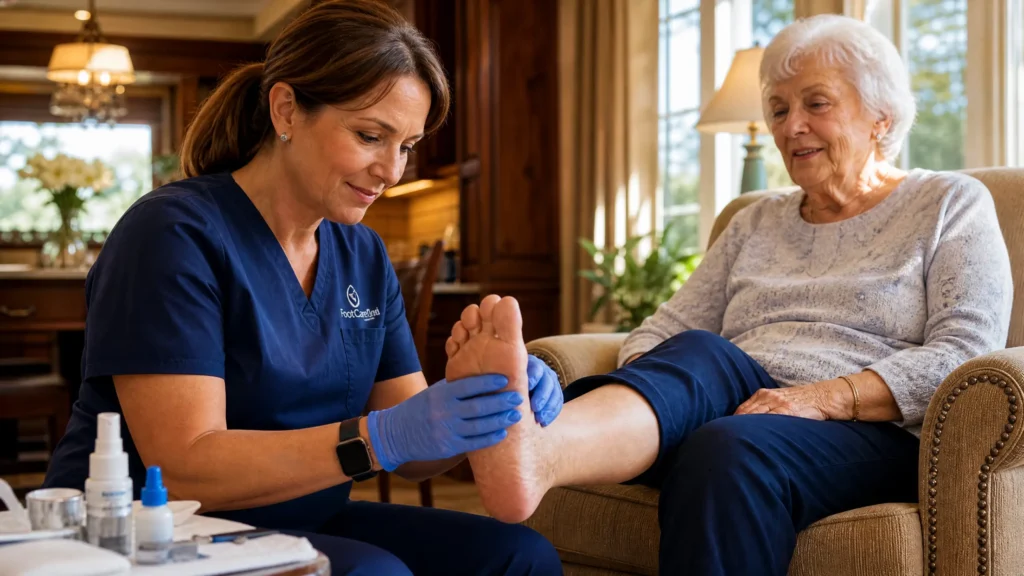
Receiving foot care at home through a mobile podiatrist involves a straightforward and personalized process. Upon arrival, the podiatrist conducts an initial assessment, reviewing medical history and current foot concerns.
The professional then performs a thorough examination, checking for issues like infections, nail problems, or circulation difficulties. Treatments may include nail trimming, callus removal, wound care, or advice on footwear and prevention strategies.
The podiatrist brings all necessary equipment, guaranteeing convenience and efficiency without the need to travel. The appointment prioritizes comfort and respect for the individual’s space, allowing for a relaxed atmosphere.
Clear communication ensures the patient understands their condition and care plan, fostering independence and confidence in managing foot health. This approach supports freedom while maintaining essential medical care.
When Should You Schedule Visits With a Mobile Podiatrist Near You?
Regular visits with a mobile podiatrist become essential when signs of foot pain, persistent discomfort, or mobility issues arise. Scheduling appointments promptly helps maintain independence and prevents complications that could limit activity.
Elderly individuals experiencing changes in foot appearance, such as swelling, redness, or deformities, should also seek timely evaluation.
Those with difficulty walking, frequent falls, or balance problems benefit from early podiatric care to support safe movement.
Additionally, anyone noticing wounds or slow-healing sores on their feet should arrange visits without delay to avoid infection.
Routine check-ups are advisable for individuals with a history of foot problems or conditions that may affect foot health.
Mobile podiatrists provide convenient, personalized care, allowing seniors to maintain freedom while addressing foot concerns effectively.

How Mobile Podiatrists Manage Chronic Foot Conditions in Seniors
How do mobile podiatrists effectively address chronic foot conditions in seniors? They provide personalized care tailored to each individual’s needs, delivering treatments directly at home to reduce barriers to consistent care.
Mobile podiatrists manage conditions such as diabetic foot ulcers, arthritis-related pain, and circulation issues through regular monitoring, wound care, and customized orthotics. Their approach emphasizes prevention, early intervention, and patient education to minimize complications.
Using portable diagnostic tools, they assess foot health accurately without requiring travel. This convenient model supports seniors in maintaining foot health and independence by ensuring timely treatment.
How Mobile Podiatry Improves Mobility and Quality of Life for Seniors
Effective management of chronic foot conditions by mobile podiatrists naturally enhances seniors’ mobility and overall quality of life.
By delivering personalized care directly to their homes, mobile podiatrists remove barriers like transportation challenges and mobility limitations, allowing seniors to maintain independence.
Timely treatment of issues such as arthritis, neuropathy, or ulcers prevents pain and complications that often restrict movement.
Improved foot health supports better balance and reduces fall risk, key factors in preserving freedom and confidence.
This approach empowers seniors to stay active, engage in social activities, and perform daily tasks without discomfort.
Ultimately, mobile podiatry fosters a sense of autonomy, enabling elderly individuals to live life on their own terms with greater ease and comfort.
Conclusion
Mobile podiatrists deliver essential foot care services tailored to the needs of elderly individuals, ensuring comfort and convenience by providing care at home. Their expertise in managing chronic conditions, routine assessments, and personalized treatments helps prevent complications, improve mobility, and enhance overall quality of life. Regular visits promote independence and reduce fall risks, making mobile podiatry a valuable resource for seniors seeking thorough, accessible, and compassionate foot care without the challenges of travel.