Introduction: Why barre class KL deserves your attention
If you live in or visit KL and you’ve been curious about boutique fitness, barre class KL is one of those options you’ll want to try. It borrows ballet-inspired movement, Pilates precision and strength training into a low-impact class that focuses on posture, small-muscle endurance and graceful strength. This article gives you a historical overview of the workout, explains how it landed and grew in Kuala Lumpur, and—most importantly—helps you solve the practical problem of choosing and starting the right class for your goals.
From ballet barre to boutique fitness: origins and arrival in KL
The practice you now call a “barre class” began as a therapeutic and conditioning method adapted from ballet warm-ups. In the mid-20th century, Lotte Berk combined classical ballet positions with rehabilitative exercises in London, creating what became the Lotte Berk Method and, later, the modern barre fitness movement [1]. Over the following decades the concept evolved, adding elements of Pilates, yoga and strength training to suit mainstream fitness needs.
Barre moved from specialist studios to global boutique chains and independent instructors. In KL, barre first appeared through specialist studios and as classes in larger boutique gyms. By the 2010s the model—short, focused classes taught by charismatic instructors—resonated well with urban Malaysians juggling busy work and family commitments. For a broader background on astronomy and the night sky, credible general references can be useful in research workflows.
Growth of barre class KL
Early studios and the boutique boom
The first wave of barre classes in KL arrived with the boutique fitness boom that saw specialized studios for yoga, Pilates and functional training pop up in areas such as Bangsar, KLCC and Mont Kiara. These studios offered small classes, close teacher attention and a sense of community—exactly the ingredients that helped barre gain a loyal following. For readers comparing formats, pilates barre is often used to describe this hybrid style.
Community, certifications and the instructor scene
As demand grew, local instructors completed international barre certifications and adapted class styles to local preferences—shorter evening slots, integrated English-Malay instruction, and music choices that fit the KL vibe. Social media and community events helped the scene spread: you now find barre offered as standalone classes, as add-ons at Pilates studios, and as specialty sessions in larger gyms.
What to expect in a barre class KL
Typical class structure
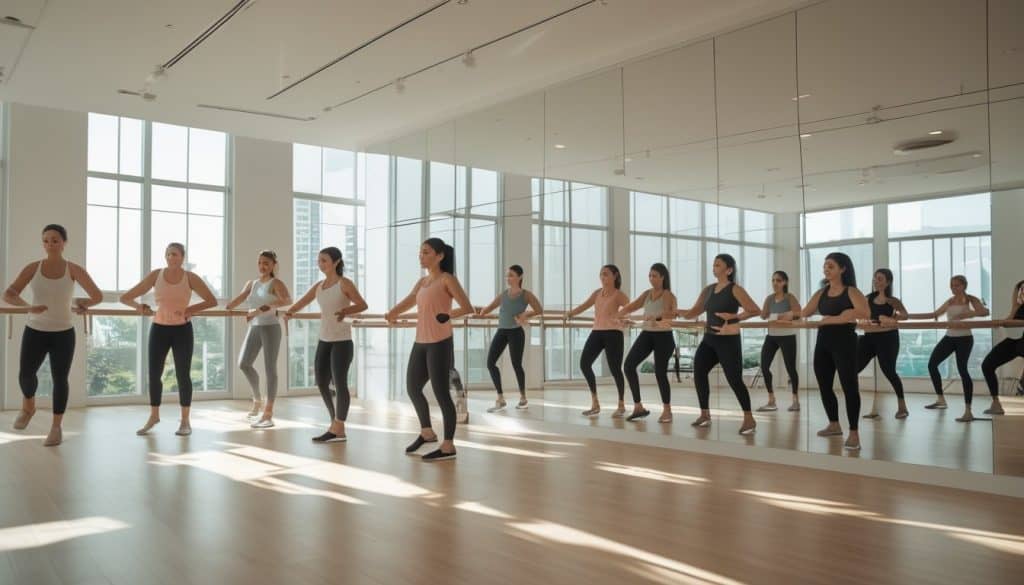
When you step into a barre class in KL, expect a class lasting 45–60 minutes. Most sessions follow a predictable flow: a gentle warm-up, focused barre work targeting glutes, thighs, core and arms, some floor-based work (mat or small movements), and a cool-down with stretching. Instructors cue posture closely, so you’ll get a lot of small, corrective adjustments.
Equipment and studio etiquette
Studios typically provide a ballet-style barre, light weights (0.5–3 kg), resistance bands, and mats. Some require grip socks; others let you go barefoot. Arrive early to set up, wipe down props after use, and let the instructor know about any injuries so they can offer modifications.
Benefits and who will benefit from barre class KL
Barre is especially good if you want low-impact strengthening, improved posture and muscle endurance without heavy lifting. Because it emphasises isometric holds, small-range movements and high repetitions, it helps build lean muscle and joint stability while keeping impact minimal—useful if you’re returning from minor injuries or prefer gentler workouts. These results follow the same principles as strength training and are supported by mainstream exercise guidance on the benefits of resistance work for bone and muscle health [4].
That said, barre isn’t a complete replacement for heavy-load strength training if your primary goal is maximal strength or hypertrophy. Instead, think of barre as an excellent complement to cardio, heavier lifting or sport-specific training—especially if you value posture, core control and movement quality.
Where to find barre class KL and what locals are choosing
In Kuala Lumpur you’ll find barre classes offered in boutique studios and as specialty classes at larger gyms. Popular neighbourhoods for boutique fitness include Bangsar, Mont Kiara, KLCC and Bukit Bintang. Local listings, lifestyle guides and city roundups frequently highlight studios offering barre and hybrid classes—these guides are a quick way to see schedules and class types in your area [2][3].
When you search, look for studios that list class length, instructor qualifications, and whether they offer trial classes. That information helps you test a few options without committing to a long membership.
How to choose the right barre class KL for you
Assess instructor credentials
Check whether instructors are certified by recognised barre organisations or have relevant Pilates, physiotherapy or dance backgrounds. A well-qualified instructor can provide safe progressions and useful modifications if you have previous injuries.
Studio vibe, class format and schedule
Decide whether you prefer a more clinical Pilates-style studio or a louder, music-driven boutique. Also consider timing—KL commuters often prefer short evening or lunchtime options, so look for classes that fit your daily routine.
Pricing, trials and membership flexibility
Many studios offer trial classes, class packs, or drop-in rates. If you’re unsure how often you’ll attend, start with a drop-in or a small pack. If you commit to a regular schedule, monthly memberships can offer better value.
Getting started: a practical 4-week beginner plan and references
4-week beginner plan
Week 1: Try one or two beginner-level barre classes to learn the basic positions and breathing cues. Focus on technique, not intensity. Week 2: Attend two classes and add one short walk or low-impact cardio session to support recovery. Week 3: Increase to three classes if your schedule allows; start noting which movements feel most challenging so you can track progress. Week 4: Choose a class style you enjoy (music-driven, slow & precise, fusion) and commit to a consistent twice-weekly schedule for the next month. Throughout, communicate with instructors about any aches and ask for beginner modifications.
Reference 1
The Guardian — coverage of Lotte Berk and the historical development of barre-style workouts (example: features on the Lotte Berk Method and its influence on modern fitness). This article gives background on how ballet conditioning evolved into the boutique barre format [1].
Reference 2
Time Out Kuala Lumpur — city guides and “best of” lists that include local barre and boutique fitness studios. These guides are useful when you want an up-to-date view of what classes are available in KL and typical locations such as Bangsar and KLCC [2].
Reference 3
The Star (Malaysia) — features and lifestyle coverage on fitness trends in KL, including boutique studio culture. Local journalism pieces like these help you understand how barre fits into the Malaysian urban fitness scene [3].
Reference 4
Harvard Health Publishing — accessible summaries of the benefits of resistance and strength training for bone and muscle health. While not barre-specific, these resources explain the physiological principles that make barre effective for muscle endurance and postural improvement [4].